Posted in Reading Response

Dear Friend,

A “Focus on Letters” Analysis and Review

Elizabeth Ervin’s chapter six of Public Literacy is entitled “Focus on Letters.” As indicated by the title, the chapter focuses on various types of letters that can be utilized within the public sphere. Ervin identifies four forms of letters to be discussed in detail within her chapter: letters to editors, letters of concern, appeal letters, and open letters.

The majority of the chapter is dedicated to taking a closer look at what each type of letter can be used for and the general appearance it takes. Ervin explains that letters to editors can come in two forms, addressed to the editors or addressed to the editor’s audience, and that letters of concern should generally follow traditional business letter formats. She offers explanations for how a writer’s motivations effect a letter type, as well as an audience’s perceptions.

Ervin’s chapter “Focus on Letters” offers a lot of helpful information for writers who intend to engage in the public sphere through the utilization of letters. While she opens the chapter with the claim that she does not intend this to be a “how-to” guide for writing letters, she does offer up an abundance of information that can assist writers throughout the process. Getting started tends to be the hardest part, but her chapter can be used to determine which type of letter to work with and the form it should take. Overall, her chapter is meant as a really useful tool for writers intending to create a public literacy letter.

Public Literacy is intended to inform potential writers about how to engage in the public sphere with public literacies in all their various forms. While Ervin makes several claims throughout that she is not intending her work to answer specific questions or give step-by-step instructions, she still managed to create a helpful guide that, though it is not a “how-to” guide, offers enough advice and examples that it works to direct potential writers in their missions. Ervin’s chapter, “Focus on Letters,” is just one more form of public literacy that is outlined and explored in Ervin’s book. The sheer volume of public literacies can be overwhelming, but Ervin endeavours to break it down into manageable pieces that can be easily understood and utilized.

While Ervin does an excellent job of breaking down the four types of letters- letters to editors, letters of concern, appeal letters, and open letters- she almost keeps it too simple. For her purposes regarding Public Literacy, it is understandable that she wants to keep her chapters short rather than bogging them and the readers down with extra information that may muddle her point. However, with chapter six, “Focus on Letters,” Ervin makes mention of a letter type that did not make it onto her list of four letters. In her “Letters of Concern” section, Ervin makes brief mention of letters of complaint. She then fails to include any more information about it.

That in itself is not a huge concern, especially considering the amount of information she does manage to pack into her chapter. Nonetheless, it leaves me wondering how many other letter forms she neglects to mention or examine within her “Focus on Letters” chapter. Are there just one or two types that she did not feel were overly relevant, or are there countless that writers could be using within the public sphere that failed to make it onto her “examine closer” list?

Susie, what shall I do – there is’nt room enough; not half enough, to hold what I was going to say. Wont you tell the man who makes sheets of paper, that I hav’nt the slightest respect for him!

Emily Dickinson
Posted in Reading Response

The Art of Subtle Persuasion

Blog Post #1


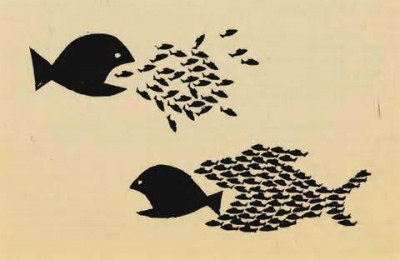
Sometimes it can be hard for one person to make a difference in big public issues, but these suggestions illustrate how we can assist each other in finding strength in numbers.

– Elizabeth Ervin

The first chapter of Elizabeth Ervin’s “Public Literacy” strives to define public literacy not by establishing a limited definition, but through the examination of various questions and obstacles that once impeded and continue to impede the development of public literacy. Ervin herself stated that she had no desire to define public literacy for her audience in strict terms, but rather desired to start a discussion that prompted her audience to come to their own conclusions regarding what public literacy is and how it could be utilized within writing for the public.

“Defining Public Literacy: Five Dilemmas”

The five dilemmas explored by Ervin make up the bulk of her article. These dilemmas, she claims, are the main reasons why it is so difficult to define public literacy. They also connect back to her opening argument, which stated that “think[ing] about ‘public literacy’ is to plunge into a series of questions that have preoccupied readers, writers, thinkers, and citizens for centuries.”

The first dilemma requires differing between public and civic, the need for which is a fairly recent development. Civic is limited to publications which impact the workings or function of the government. For centuries, anything public, including entertainment, were also considered to play an important role in the development of culture, which impacted the civic. It is only recently that a gap has formed which necessitates the differentiation.

The second and third dilemmas revolve around diversity. Centuries before, it was safe to assume that anyone involved in the public sphere would have similar values and beliefs. Today, the world is so incredibly diverse that it is impossible to recognize a single public sphere. Instead, there are multiple public spheres with individuals often belonging to more than one sphere in order to account for the diversity in values and beliefs held by an incredibly diverse populace. To accommodate the increasing number of public spheres, an increasing number of platforms to publish to have been developed.

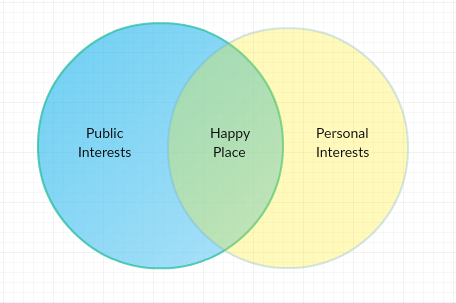
Dilemma number four discusses the venn diagram that is public and personal interests for when it comes to participating in the public sphere. Personal interests do not always match public interests, but the two are not mutually exclusive either. The fifth and final dilemma introduced in Ervin’s chapter discusses ownership of intellectual property and the position of public domains.

The Point

The word dilemma can be misleading. It tends to have a negative connotation and basically means there’s a problem. When Ervin calls these points mentioned above dilemmas, she is not arguing that they are wrong. The point of the chapter was to define public literacy. The dilemmas then, are simply points that make defining public literacy difficult. They are not difficulties that need to be swept away. Quite the opposite, in fact. Not everything needs to be for a purpose to the government, as long as the option to be involved with the government remains. Certainly increased diversity in both the number of spheres and the platforms available to them create countless unique conversations that all manage to connect to each other despite the differences. Finally, it is unfortunate that some people favor personal interest to public interest, but the whole point of public writing is to dissuade the notion that those in power are all-powerful and those not directly involved in a situation are powerless.

In other words, by attempting to define public literacy by examining the dilemmas involved with that task, Ervin makes the powerful statement that we have power in numbers. Anybody is capable of change, if only they have the proper tools. To Ervin, those tools include access to the public sphere. Sure, some people will use the public sphere to watch hours of adorable cat videos. The point is that others will use the public sphere to campaign for equal rights for the LGBTQIA community, or to inspire wide scale change in the school systems, or to get Netflix to keep Friends for another season.

The possibilities are endless.

Elizabeth Ervin managed to create a deceptively simple article which appeared to define public literacy by not defining public literacy. Rather than a simple definition, Ervin summed up the history of public spheres in such a way that subtly lobbied for the importance of participation by anyone willing. Her stated goal was to lead her audience to becoming more effective at writing for the public by exposing them to ideas and letting them come to their own conclusions. Well, she did it.