
It has been many, many months since I began this blog as part of my Writing in the Public Sphere class. I have thought of it many times, and often considered putting up another post. I always struggled with what I could write, though. Mental Health in schools is an issue near and dear to my heart, but I had not been doing a lot of work in that area. So, my blog sat untouched since posting my final project for the course. Until now.
What follows is a writing assignment for my current class, Literacy and Writing Studies. The prompt asked us to think about literacy in our own lives and draft a narrative that explored our relationship with that literacy in order to make an overall point. As I am sure you can guess by my reappearance on this blog, my overall point involves mental health. It is a bit more round-a-bout than my usual posts, but still there and still important. So, without further ado, my literacy narrative:
My senior year of high school, I was a volunteer for a trial program that my school counsellors were attempting to implement. My classmates and I would meet with students from the grade below us periodically throughout the year and guide them through the process of choosing a college and applying. At the start of the first meeting, I was sitting next to my friends, some of whom I had known since first grade, all of whom attended at least one AP class with me, talking excitedly about this program and college in general. The counsellors and student leaders in charge of the program got everyone settled down, and us seniors proceeded to stand up, one by one, and state our major and the name of the college we were to attend. Lillian was attending CSU Long Beach. Faye was going to UC Santa Barbara. Redlands University. UCLA. UC Davis. Cal Poly San Luis Obispo. San Diego State. Montana State University, which was particularly exciting to me because I had applied and been accepted there. The list continued, all of my friends proudly declaring where they would be next year. Then it was my turn. I stood up and said “I am going to be an English major at Victor Valley College.” I never attended another meeting. I have no idea if the program continued after that, but I was never informed that my presence was needed as a mentor.
My college of choice was a junior college, a two-year institution that awarded associates degrees, rather than a more ‘prestigious’ four-year institution for bachelors. It was quite astounding, the response to my chosen path. My high school had a direct transfer set up between them and Victor Valley, but I can count on one finger the number of times that pathway was mentioned throughout my four years as a high school student. Four year universities were the only acceptable schooling option, and the fact that I was going to a community college was something I should have been embarrassed about, not proud of. The money I was saving in tuition and housing was not a consideration, nor was my emotional state regarding how prepared I was for the drastic change going to university would be. The only thing that mattered was the prestige of four full years.
This was just one of many instances in which my school and the people I trusted to guide me limited the information available to what they deemed acceptable. At the time, it had seemed like my school was progressive and open with its students. I had a teacher with two full sleeves of tattoos. Another teacher regularly talked about his past as a “hippy,” including some drug use. In class, I was allowed to do a project on what I considered to be a very immoral and honestly quite twisted book (A Clockwork Orange by Anthony Burgess). These were topics that seemed radical to my younger self. They really weren’t. The school followed the canon. Every piece of literature we ever read at my school was created by a white author from an approved list of those deemed acceptable. I was completely unaware of the incredible diversity of literature until I reached college. Up until then, I had never come in contact with Black literature, Indegenous Peoples literature, or Latinx literature. I was only ever taught ‘academically acceptable’ literature.
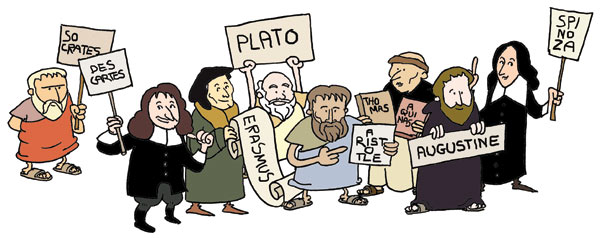
Winn, et al. claim that “by being offered only one version of literacy, students are in effect denied literacy,” (151). The denial of literacy, according to them, is a denial of a civil right. By limiting the knowledge to what was deemed important, entire genres, entire cultures were silenced and kept from us. We may have learned to ask questions about white concerns, but we never learned that there were other issues in the world. We never learned what questions we should be asking, only what questions they prompted us to ask. We trust our schools to educate us and teach us the literacies we need to survive in the world, but the current school system really struggles to fulfill that promise. My school was excellent at conveying academic literacy, but they did not offer anything else. Without that ‘anything else,’ I was really struggling.
In June of 2016, weeks after I graduated from my “progressive” high school, my group chat of fellow readers/writers finally convinced me to try a new genre of books. Him by Sarina Bowen is basically just smut with a little plot thrown in, but at the time, it was a revelation. I fell in love with this book and its sequel. I fell in love with the entire LGBTQ genre. Today, having reread this book several times, I cannot point to a specific part of the book and say “this is why everything changed.” All I know is that everything did change. Over the coming years, my pleasure reading would transition to exclusively LGBTQ novels. During this time, my vocabulary expanded exponentially. Everyone knows “gay” and “lesbian.” A lot of people know “bisexual.” My reading taught me pansexual, and panromantic. Asexual. Graysexual. Transgender. Transexual. Genderqueer. Agender. Nonbinary. Suddenly I had names for things I had never even considered before. I was familiar with concepts that I didn’t even realize were possibilities. I was familiar with the various genders, the multiple sexualities, and the overlap between all of them. I was exposed to an entirely new literacy surrounding the concept of queer and with it came the recognition of an entirely new culture in which I started to see myself.
It was finally seeing myself in those pages that allowed me to realize how truly damaging my high school experience had been to me, especially in those delicate developmental years. I had no idea where my place in the world was, was struggling terribly as I searched for it, and I was not finding it in the literature we were reading or the conversations we were having. If I, as a white person, struggled to connect with literature about white populations that felt so far removed from my life, I can only imagine what it must have been like for my classmates. Latinx, Asian, Black, Native American: my classmates were a diverse bunch, stifled into reading a very limited selection of literature. We were all trying to find our places in the world, and our school was showing us only one possibility of the endless possibilities that exist. They did not consider anything else to be important, and because of that, I, and I am sure many of my classmates, were completely unprepared for how vast and diverse the world really was. I was completely overwhelmed, and still deal with the anxiety that stemmed from that sense of displacement despite finding some grounding in my queer identity.
High school and college is the time when most people really start to discover who they are. They build their identities based off of their experiences and their ideas about who they want to be. That is not easy to do when the only reference they have is someone who looks nothing like them, who acts nothing like them, who is completely removed from their lives. Literature should enable people, not hinder them. Reading let me discover a huge part of who I am. It allowed me to learn and become a part of an entirely new culture that I otherwise had no contact with. Even now, my strongest connection to the queer culture is through literature. Acknowledging my place in queer society let me settle into my life in a way that I desperately needed. Without finding those books, and without learning about a whole new possible identity and culture, I cannot imagine what my life would be like.
My school and the school system that it is based off (i.e. No Child Left Behind) was incredibly limiting and only allowed us to interact with the ‘white’ literature. They wanted us to learn only what they deemed to be the ‘right’ lessons. It is a concept that is incredibly short-sighted and damaging. It erased entire cultures and devalued the incredible diversity of its student-body. Diversity and multiplicity should be the focus of every school and every classroom. The world is a huge and diverse place, and schools should be preparing students for that, not limiting them to what they think is the ‘right’ (hear- ‘white’) way of life and academia. Finding my place in the world as a queer individual drastically changed my life from the mess of insecurities that my high school left me with. Introducing diverse literature and recognizing that there is more than one way to live and operate within and outside of academia should not be such a difficult task considering how incredibly diverse the world is today. Any erasure of culture should not be allowed, and especially not encouraged by the programs that control our schools and our childrens’ lives.
Works Cited
Winn, Maisha T., et al. “The Right to Be Literate: Literacy, Education, and the School-to-Prison Pipeline.” Review of Research in Education, vol. 35, 2011, pp. 147–173. JSTOR, www.jstor.org/stable/41349015. Accessed 3 Feb. 2020.
 Mental Health Matters