Posted in Reading Response

Dear Friend,

A “Focus on Letters” Analysis and Review

Elizabeth Ervin’s chapter six of Public Literacy is entitled “Focus on Letters.” As indicated by the title, the chapter focuses on various types of letters that can be utilized within the public sphere. Ervin identifies four forms of letters to be discussed in detail within her chapter: letters to editors, letters of concern, appeal letters, and open letters.

The majority of the chapter is dedicated to taking a closer look at what each type of letter can be used for and the general appearance it takes. Ervin explains that letters to editors can come in two forms, addressed to the editors or addressed to the editor’s audience, and that letters of concern should generally follow traditional business letter formats. She offers explanations for how a writer’s motivations effect a letter type, as well as an audience’s perceptions.

Ervin’s chapter “Focus on Letters” offers a lot of helpful information for writers who intend to engage in the public sphere through the utilization of letters. While she opens the chapter with the claim that she does not intend this to be a “how-to” guide for writing letters, she does offer up an abundance of information that can assist writers throughout the process. Getting started tends to be the hardest part, but her chapter can be used to determine which type of letter to work with and the form it should take. Overall, her chapter is meant as a really useful tool for writers intending to create a public literacy letter.

Public Literacy is intended to inform potential writers about how to engage in the public sphere with public literacies in all their various forms. While Ervin makes several claims throughout that she is not intending her work to answer specific questions or give step-by-step instructions, she still managed to create a helpful guide that, though it is not a “how-to” guide, offers enough advice and examples that it works to direct potential writers in their missions. Ervin’s chapter, “Focus on Letters,” is just one more form of public literacy that is outlined and explored in Ervin’s book. The sheer volume of public literacies can be overwhelming, but Ervin endeavours to break it down into manageable pieces that can be easily understood and utilized.

While Ervin does an excellent job of breaking down the four types of letters- letters to editors, letters of concern, appeal letters, and open letters- she almost keeps it too simple. For her purposes regarding Public Literacy, it is understandable that she wants to keep her chapters short rather than bogging them and the readers down with extra information that may muddle her point. However, with chapter six, “Focus on Letters,” Ervin makes mention of a letter type that did not make it onto her list of four letters. In her “Letters of Concern” section, Ervin makes brief mention of letters of complaint. She then fails to include any more information about it.

That in itself is not a huge concern, especially considering the amount of information she does manage to pack into her chapter. Nonetheless, it leaves me wondering how many other letter forms she neglects to mention or examine within her “Focus on Letters” chapter. Are there just one or two types that she did not feel were overly relevant, or are there countless that writers could be using within the public sphere that failed to make it onto her “examine closer” list?

Susie, what shall I do – there is’nt room enough; not half enough, to hold what I was going to say. Wont you tell the man who makes sheets of paper, that I hav’nt the slightest respect for him!
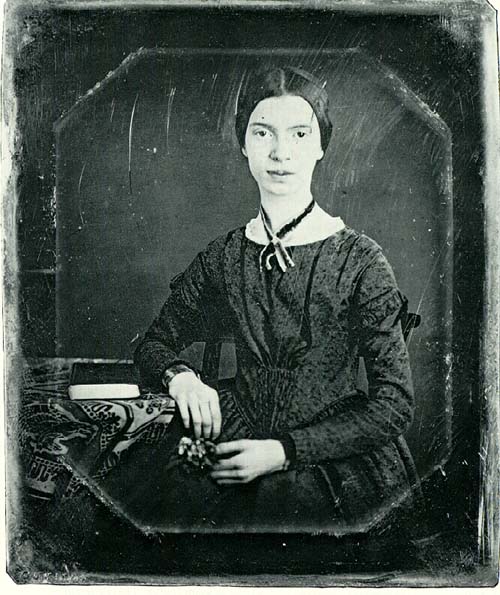


Emily Dickinson
Posted in Reading Response

Collaborating Online: The New Frontier?

Spock, incredibly smart, incredibly isolated — Star Trek 2009

Anthony T. Atkins wrote an essay entitled “Collaborating Online: Digital Strategies for Group Work,” which served to outline the various ways electronics and the internet can be of assistance to group work, especially in the college classroom. The essay focuses predominantly on Wiki and Google Docs, the two main platforms at the time of publication in 2010. The essay itself is broken into three sections, which include assessing the project or task, using technology to organize the project, and using technology to present the project.

The essay is directed at college students, offering strategies which serve to work around inflexible schedules, create a more productive atmosphere, and alleviate participation problems. Offering free and easily accessible platforms as resources is one way Atkins effectively acknowledges his intended audience. Another is offering the explanation that the platforms he recommends allows groups to access all media involved in a group project without the tedium of emailing individual resources. Atkin’s final push for utilizing online resources for group work is the ability to police non-contributing group members, effectively addressing the biggest complaint involved with group assignments.

As a piece of work in the public sphere, Atkin’s essay is a good example of how to appeal to a particular audience for a specific purpose. Atkins believes in using technology as a resource for group work in schools. He makes an argument directed at college students who have to participate in group work as part of a class. He assumes various facets of a college students’ personality, like being persuaded by free resources, when he constructs his argument. He makes a claim of policy, arguing that his points are credible and that his audience should utilize his advice.

Beyond the mechanics involved in the essay, the subject of technology being used in a classroom setting introduced by Atkins brings up an interesting debate regarding the changing role of technology within schools. The use of technology within classrooms has been increasing exponentially. Google Classroom and other Google platforms allow for easier access to all school documents and resources, especially when using a school computer. Youtube and Ted Talks are being utilized by teachers as part of their lesson plans. Schools even have their parents sign up on various apps that allow the schools to send out mass text messages. Technology is firmly planting itself within schools.

On one hand, as pointed out by Atkin in his essay, it is incredibly convenient to utilize technology. It allows students to work together or teachers to see progress. It saves paper and gives teacher access to a much broader spectrum of resources. Websites such as GoNoodle are popping up constantly, their main purpose providing teachers with resources to use directly in the classroom, projected on a screen in front of the entire class. Another positive aspect mentioned by Atkins is the decreased pressure for those students who struggle to communicate, an online platform allowing them to participate where they may otherwise hold back.

Technology is not just a tool. It can give learners a voice that they may not have had before.

George Couros

On the other hand, technology is rapidly moving towards a place where face-to-face interactions are a thing of the past. Atkin’s entire essay is dedicated to the idea that group work can now be done without actually being in the same room as each other. Very little direct interaction is even needed once initial plans have been laid, as everyone can simply add their work and see what others have done without conversation. Entire classes are now being held online, sometimes with interactions among students and sometimes only interacting with the program.

Classrooms don’t need tech geeks who can teach; we need teaching geeks who can use tech.

David Geurin

Decreased social interaction is becoming a common and almost expected aspect of adolescents lives. A new stereotype has emerged that considers adolescents incapable of social interactions; awkward and not good with people is the new norm. Certainly, technology is incredibly convenient in a lot of ways, only some of which were pointed out in Atkin’s essay. However, the question has to be asked: Where does it stop? Can we find the line where technology remains helpful and not smothering, or are we destined to live behind a screen forever?

Will it stop before we have to rely on a robot with more social capabilities than us? — Wall-E 2008


Posted in Event Reflections

Apple Valley Inn – High Desert Arts and Literary Festival

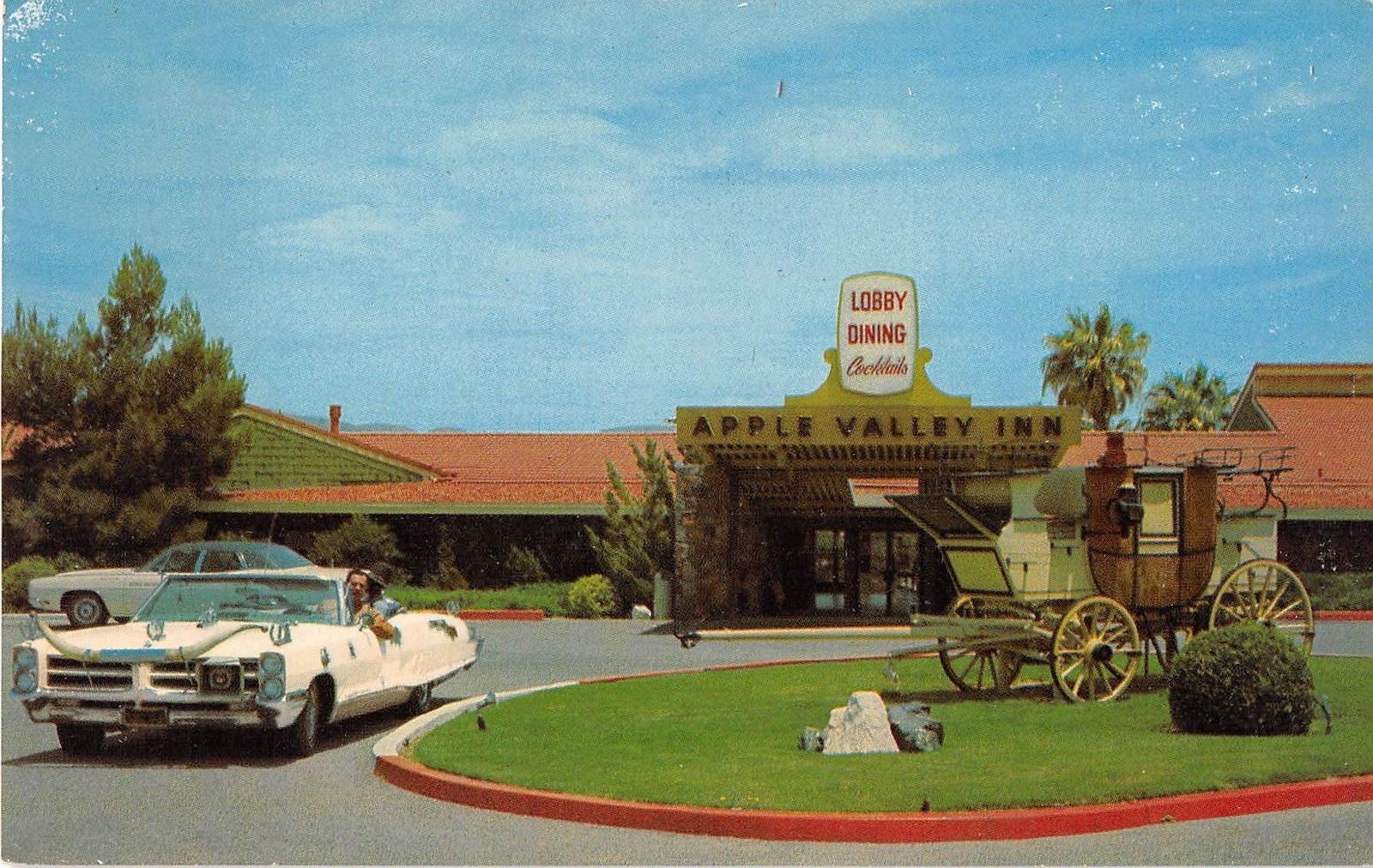
Apple Valley Inn main building, during its heyday

The Apple Valley Inn, opened 1948, was a popular destination for Hollywood celebrities during the ’40s, ’50s, and ’60s. The Inn’s website boasts visitors such as Bob Hope, Marilyn Monroe, John Wayne, Richard Nixon, Roy Rogers and Dale Evans during the height of the Inn’s popularity. The Inn was closed in 1987 and has spent the last sixteen years under private ownership slowly being refurbished.

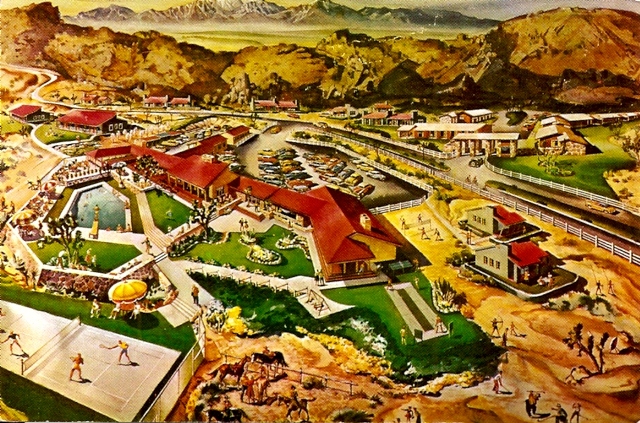
Concept art based on architect Hugh Gibbs’ vision

At its best, the Inn claimed 90 miles of hiking and riding trails, a lake for recreation, a golf course, a heated pool, tennis courts, and two cocktail lounges, both well stocked and luxurious.

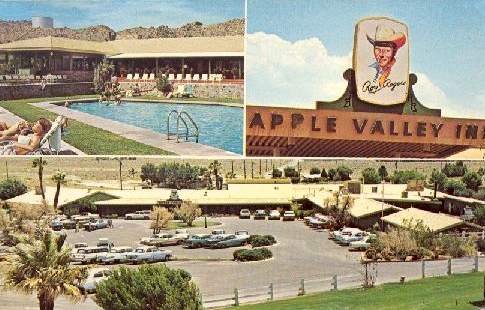
Apple Valley Inn postcard
Planter currently in front of the Inn’s main building

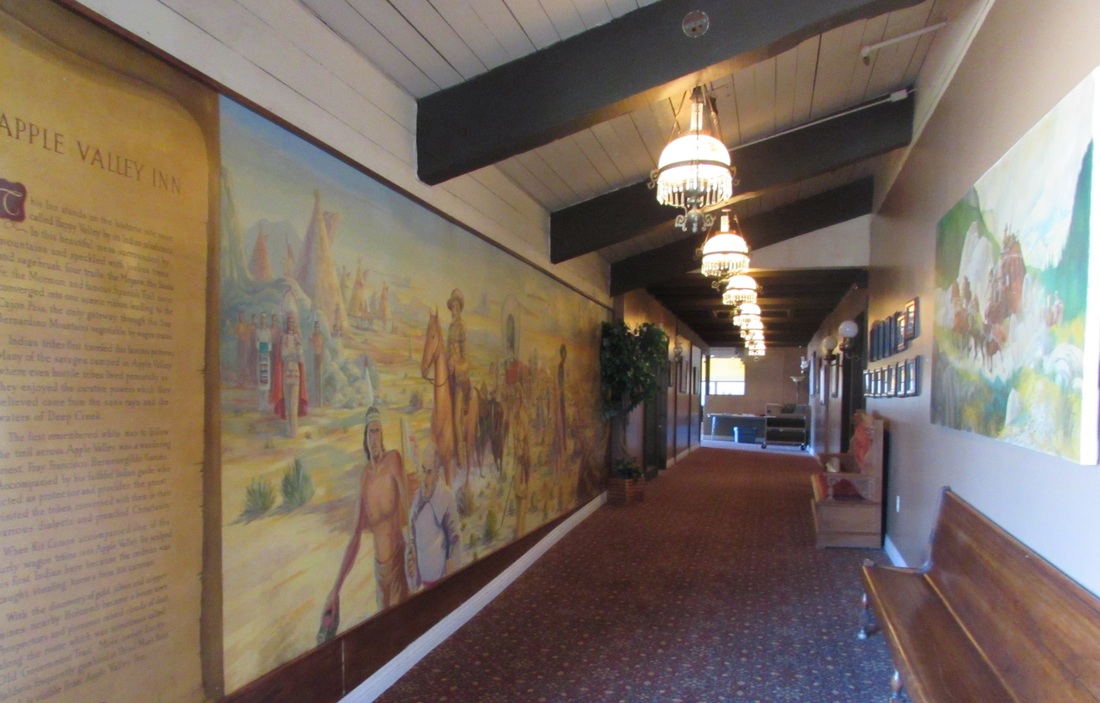
Though the Inn has seen better days, the current owners are striving to recreate the history that once lived within its bounds. The entrance proudly displays an old wagon, though not the original, as well as a similar “Apple Valley Inn” sign and cover, visible just above the wagon. The walls within the main building are full of old pictures, beautiful paintings, and a mural that graced the wall before the Inn’s official closing.

Famous AVI mural and history painted in the hallway. Picture found on Apple Valley Inn’s website.
helpful and promotional

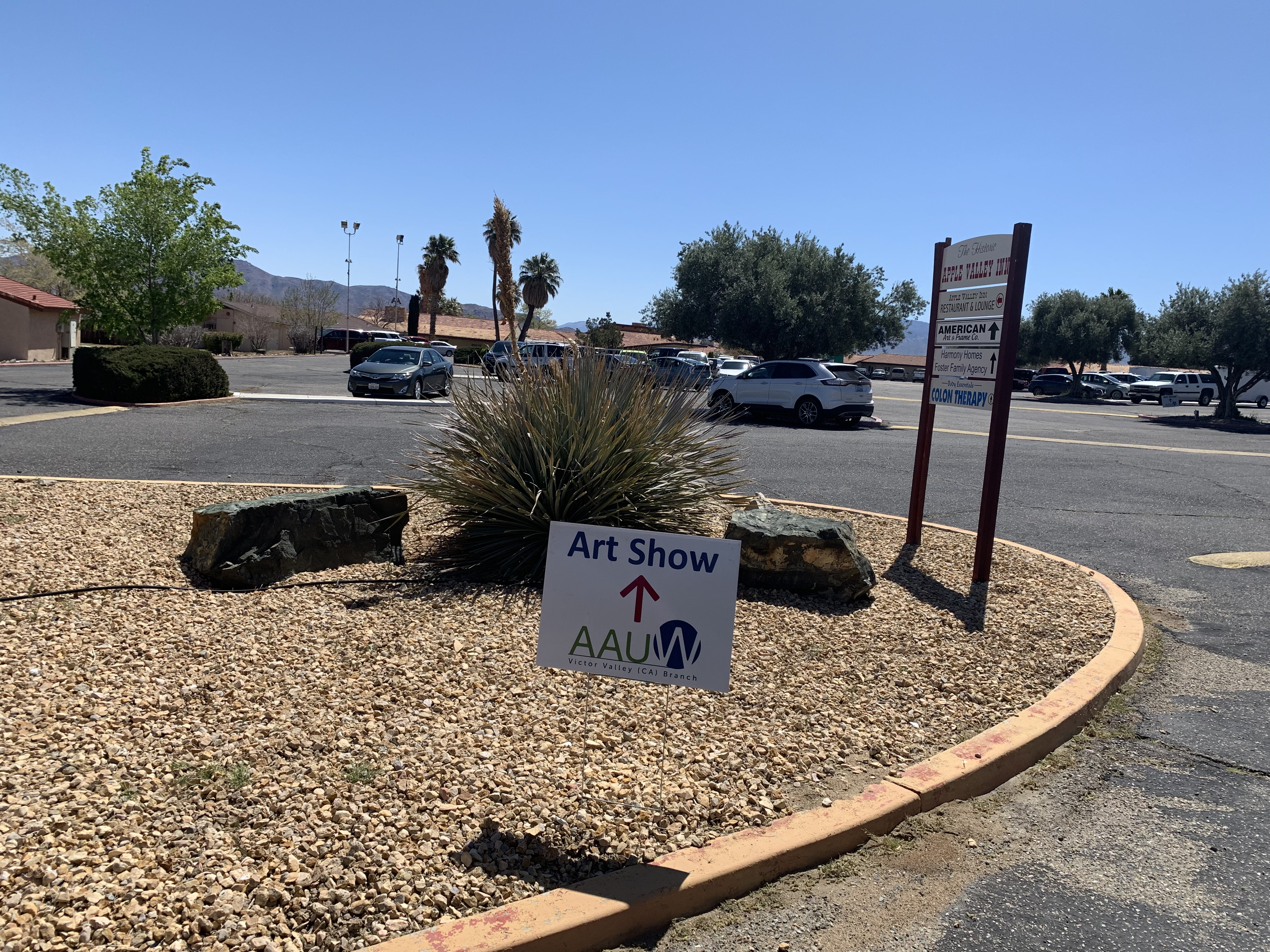
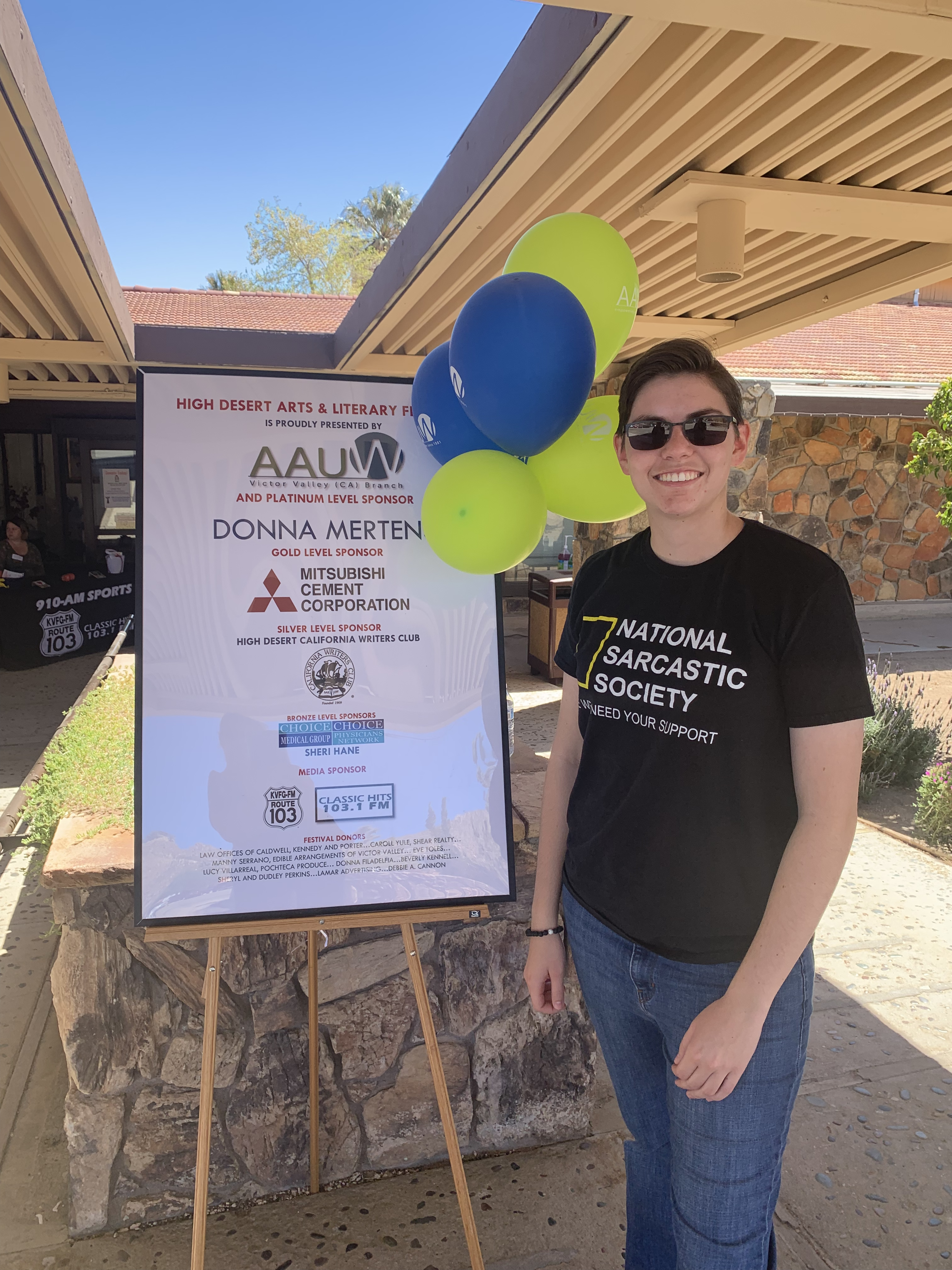
It is fitting then, that this beautiful, historically significant site is the location of the High Desert’s Arts and Literary Festival. Taking place on a Saturday in April, the event was open for six hours and free to the public. Approaching the Inn, there were two younger adults standing on the sidewalk near the entrance, waving signs promoting the festival, several of which were posted to help navigate to the event. The parking lot boasted a food truck ready to serve and the entrance was flanked by both a popcorn stand and a snow cone stand. Clearly hoping to portray a fun front in order to attract family elements, it is only upon walking through the front doors that the significance of the location becomes apparent.

Entering the event

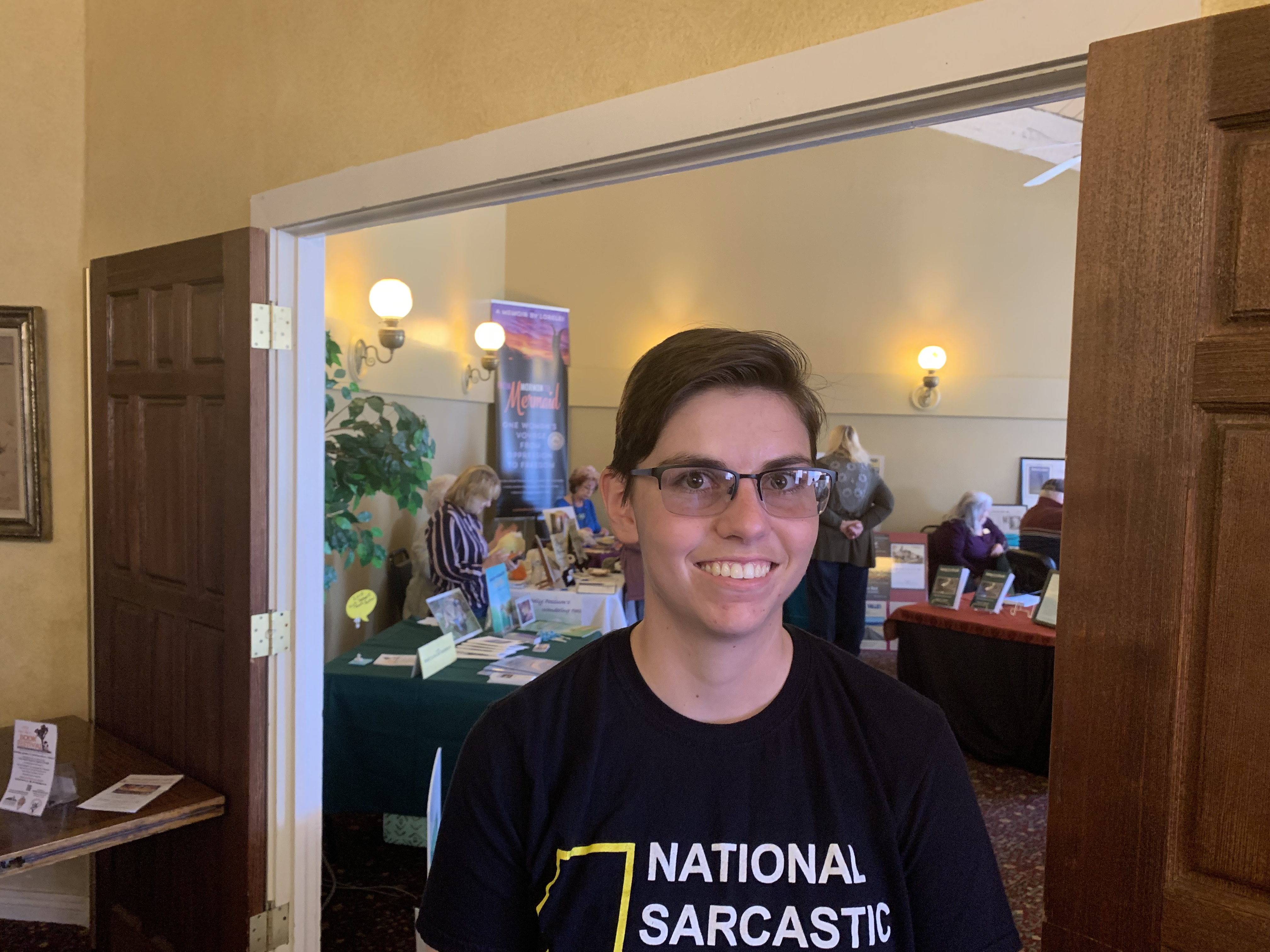
The building itself held constant and beautiful reminders of the Inn’s history: old benches and other artifacts, numerous paintings, and the extravagance of some features. Peppered in amongst the older artworks dedicated to the building were the booths, all showcasing unique and incredible art. In the first room alone, there was an abstract painter with astonishingly vibrant colors, a woodworker with truly delicate crafts, three painters with varying subjects, and a woman with gracefully blown glass. The next room only became more diverse with jewelers, painters, photographers, quilters, sculptors, and other artisans. From the desert to beaches, adorable insects to magnificent wolves, delicate glass earrings to wood bracelets, the festival was a place for everyone to showcase their art, whatever that may be.

A room full of authors and readers

Arriving a little after eleven, the event was already in full swing. People bought popcorn and snow cones outside, taking the time to speak with the event organizers explaining that the proceeds benefited local STEM educational programs and scholarships. Every booth inside had the artist next to their displayed works, talking to those who perused and perhaps deigned to purchase some of the art for themselves. An older photographer and another older author had crowds building around their booths, they were so engaged in conversations with their potential customers. The children’s center was bursting with noise as kids got their faces painted, adding a live demonstration of what the art that surrounded them could be.

The festival was a success, both for those who were fundraising for the educational programs and scholarships and for those artists and authors present and striving for exposure. It was truly a community event, something for all ages to come to, enjoy, and learn. Children were exposed to art, younger adults were able to get inspiration, and the older generations collected beautiful crafts and conversations. It was incredible to see how involved all the perusers became with the artist and their art work. All of this community engagement in a truly unique and historic site. Not only did this event provide an opportunity for authors and artists to connect with their audiences, students to fundraise for educational purposes, and citizens to connect with their community, it also offered a glimpse of what the once prolific historical Apple Valley Inn could become if the community banded together and gave it the care and attention it needed.

Apple Valley Inn main building, 2008

For more information on current plans for the Apple Valley Inn:

For more reading on the history of the Apple Valley Inn:

Posted in Reading Response

The Art of Subtle Persuasion

Blog Post #1


Sometimes it can be hard for one person to make a difference in big public issues, but these suggestions illustrate how we can assist each other in finding strength in numbers.

– Elizabeth Ervin

The first chapter of Elizabeth Ervin’s “Public Literacy” strives to define public literacy not by establishing a limited definition, but through the examination of various questions and obstacles that once impeded and continue to impede the development of public literacy. Ervin herself stated that she had no desire to define public literacy for her audience in strict terms, but rather desired to start a discussion that prompted her audience to come to their own conclusions regarding what public literacy is and how it could be utilized within writing for the public.

“Defining Public Literacy: Five Dilemmas”

The five dilemmas explored by Ervin make up the bulk of her article. These dilemmas, she claims, are the main reasons why it is so difficult to define public literacy. They also connect back to her opening argument, which stated that “think[ing] about ‘public literacy’ is to plunge into a series of questions that have preoccupied readers, writers, thinkers, and citizens for centuries.”

The first dilemma requires differing between public and civic, the need for which is a fairly recent development. Civic is limited to publications which impact the workings or function of the government. For centuries, anything public, including entertainment, were also considered to play an important role in the development of culture, which impacted the civic. It is only recently that a gap has formed which necessitates the differentiation.

The second and third dilemmas revolve around diversity. Centuries before, it was safe to assume that anyone involved in the public sphere would have similar values and beliefs. Today, the world is so incredibly diverse that it is impossible to recognize a single public sphere. Instead, there are multiple public spheres with individuals often belonging to more than one sphere in order to account for the diversity in values and beliefs held by an incredibly diverse populace. To accommodate the increasing number of public spheres, an increasing number of platforms to publish to have been developed.

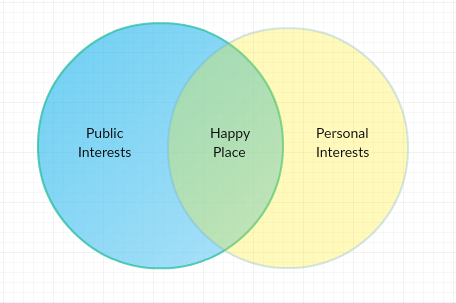
Dilemma number four discusses the venn diagram that is public and personal interests for when it comes to participating in the public sphere. Personal interests do not always match public interests, but the two are not mutually exclusive either. The fifth and final dilemma introduced in Ervin’s chapter discusses ownership of intellectual property and the position of public domains.

The Point

The word dilemma can be misleading. It tends to have a negative connotation and basically means there’s a problem. When Ervin calls these points mentioned above dilemmas, she is not arguing that they are wrong. The point of the chapter was to define public literacy. The dilemmas then, are simply points that make defining public literacy difficult. They are not difficulties that need to be swept away. Quite the opposite, in fact. Not everything needs to be for a purpose to the government, as long as the option to be involved with the government remains. Certainly increased diversity in both the number of spheres and the platforms available to them create countless unique conversations that all manage to connect to each other despite the differences. Finally, it is unfortunate that some people favor personal interest to public interest, but the whole point of public writing is to dissuade the notion that those in power are all-powerful and those not directly involved in a situation are powerless.

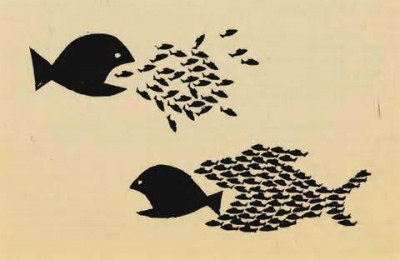
In other words, by attempting to define public literacy by examining the dilemmas involved with that task, Ervin makes the powerful statement that we have power in numbers. Anybody is capable of change, if only they have the proper tools. To Ervin, those tools include access to the public sphere. Sure, some people will use the public sphere to watch hours of adorable cat videos. The point is that others will use the public sphere to campaign for equal rights for the LGBTQIA community, or to inspire wide scale change in the school systems, or to get Netflix to keep Friends for another season.

The possibilities are endless.

Elizabeth Ervin managed to create a deceptively simple article which appeared to define public literacy by not defining public literacy. Rather than a simple definition, Ervin summed up the history of public spheres in such a way that subtly lobbied for the importance of participation by anyone willing. Her stated goal was to lead her audience to becoming more effective at writing for the public by exposing them to ideas and letting them come to their own conclusions. Well, she did it.

Posted in Misc.

For English 240

Hello to whoever happens upon this blog.

As should be apparent at this point, this blog was started as part of the requirements for English 240. As such, it will contain various assignments for the course, including responses to various readings and events, as well as final projects and group work.

My passion and the emphasis for this blog will focus on mental health in public schools. I believe wholeheartedly that awareness needs to be raised in regards to mental health, especially in adolescents and public schools. Whenever possible, content of this nature will be included for the perusal of my professor and anyone else who manages to stumble across these words.

Until then, enjoy these fabulous words attributed to Mark Twain.

I have never let my schooling interfere with my education. – Mark Twain

Menatl